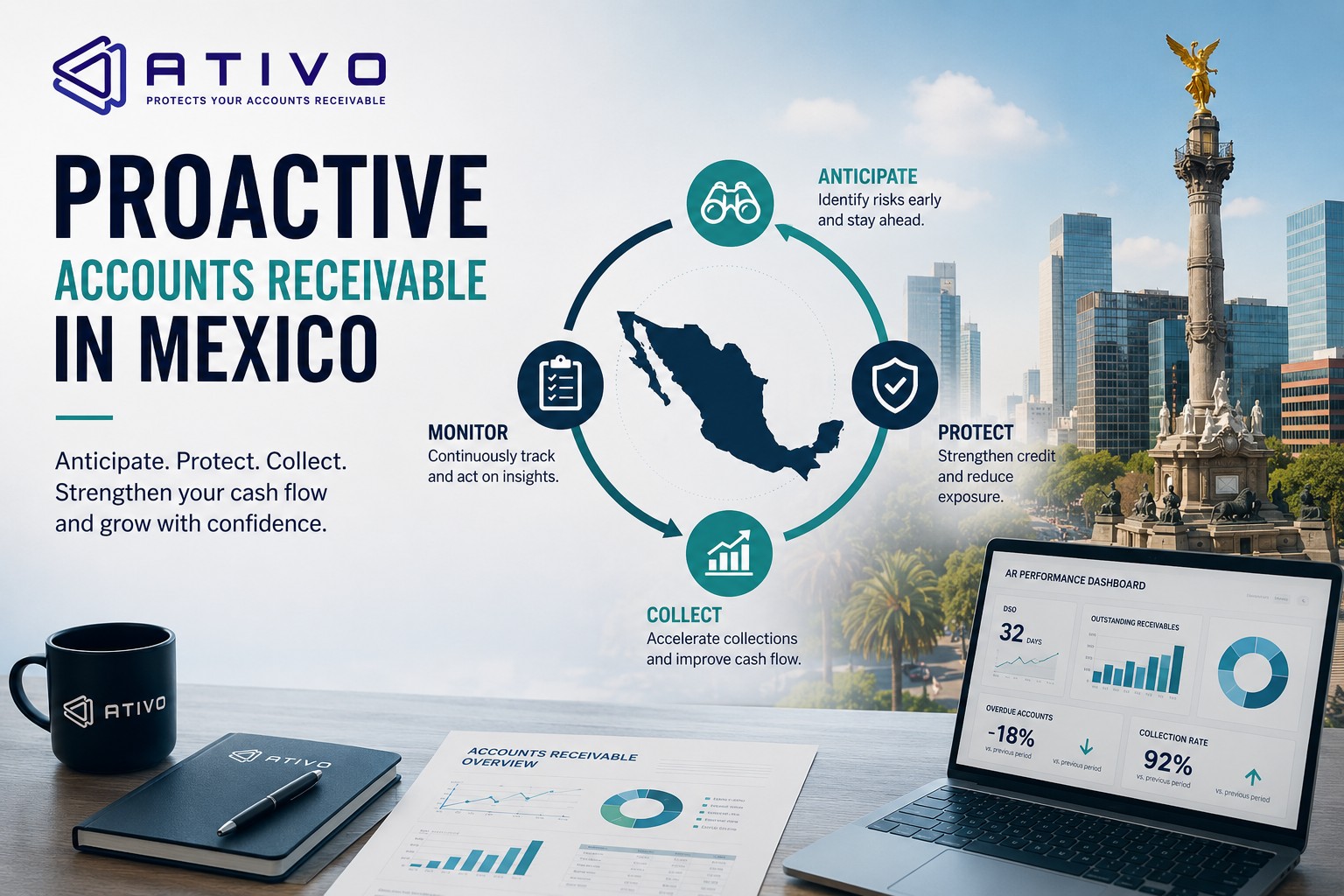

💡 Accounts receivable management in Mexico is not a collection process — it is a continuous financial discipline that begins before credit is extended. Companies that treat AR management as reactive consistently achieve lower recovery rates, higher DSO, and more write-offs than those that build proactive systems that prevent problems before they escalate.
Is your accounts receivable management in Mexico reactive rather than proactive?
→ Get a free portfolio assessment from ATIVOWhy Proactive Accounts Receivable Management in Mexico Outperforms Reactive Collection
As we explore in our article on managing debts in Mexico before they affect your cash flow, the warning signs of a payment problem — increasing DSO, partial payments, repeated extensions, declining responsiveness — are detectable well before an account becomes a collection problem. The financial case for proactive management is clear:
The 6 Components of a Proactive Accounts Receivable Management System in Mexico
The Structured Escalation Sequence
Want to build a proactive receivable recovery system for your Mexico portfolio?
→ Talk to an ATIVO specialistThe Cost of Reactive Accounts Receivable Management in Mexico
The financial cost of reactive AR management is not just the write-offs — it is the full ecosystem of consequences:
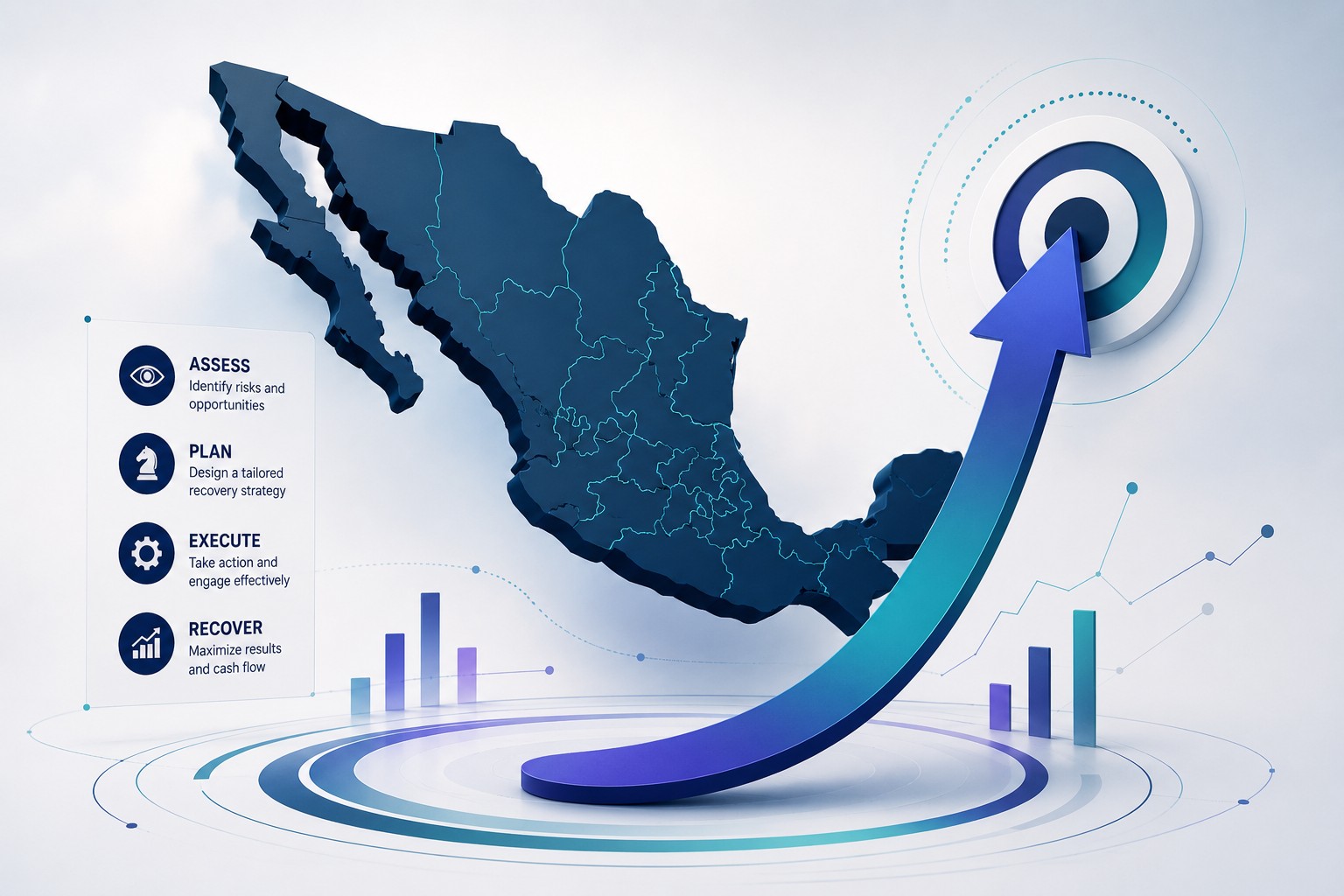
Credit Risk at the Source: Know Your Customer Before Extending Credit in Mexico
The highest-leverage intervention in accounts receivable management Mexico is the one that prevents bad accounts from entering the portfolio. Running KYC and credit risk reports on Mexican companies before extending credit provides RFC and SAT status verification, corporate structure validation, D&B score, litigation history, and payment behavior references — converting a credit decision into a defensible risk position.
When to Bring in External Support for Accounts Receivable Mexico
Even a well-structured proactive system will generate cases requiring external collection support. As we detail in our guide on choosing the right debt collection service in Mexico, external engagement is the correct structural response when:
- Internal escalation reached the formal demand stage without result
- The debtor is unresponsive, inubicable, or suspected of asset transfer
- The prescription deadline for judicial action is approaching
- The debt amount justifies professional specialist management
What Proactive Accounts Receivable Management in Mexico Looks Like in Practice
The receivable management results with Bridgestone Mexico illustrate what a structured, proactive approach delivers: systematic portfolio segmentation, tailored negotiation by debtor profile, and continuous reporting that enabled data-driven decisions at every stage — not reactive responses to collection failures.
At ATIVO, we support proactive receivable recovery strategy Mexico at every level: KYC intelligence before credit is extended, extrajudicial collection at the right trigger point, judicial escalation with in-house legal capability, and real-time visibility through our QUID platform for international clients.
Frequently Asked Questions — Accounts Receivable Management Mexico
What is the difference between proactive and reactive accounts receivable management in Mexico?
Proactive accounts receivable management Mexico acts before problems become visible — through credit risk assessment, pre-due-date communication, systematic monitoring, and defined escalation triggers. Reactive management waits until invoices are past due before activating any response. Proactive management consistently achieves higher recovery rates, lower DSO, and significantly lower cost per recovered dollar.
When should a company bring in external support for accounts receivable in Mexico?
External engagement is appropriate when internal escalation reaches the formal demand stage without result, when the debtor is unresponsive or inubicable, when the prescription deadline for judicial action is approaching, or when the debt amount justifies professional specialist management. Engaging a proactive collections Mexico specialist at 30–45 days overdue consistently produces better outcomes than waiting until 90–120 days.
How do prescription deadlines affect accounts receivable management in Mexico?
Under the Mexican Commercial Code, the right to initiate judicial collection expires based on document type: 3 years for a promissory note (pagaré), 6 months for a check. A proactive accounts receivable management Mexico system includes automatic alerts for approaching deadlines — so that no case loses its judicial option while waiting for an internal decision. Once the deadline passes, the right is permanently lost.
What documents are needed for effective accounts receivable management in Mexico?
The most effective documentation for proactive collections Mexico is a promissory note (pagaré), which qualifies as an executable title and allows immediate asset seizure in the juicio ejecutivo mercantil. At minimum, a formally signed contract with enforceable clauses and documented payment terms. Invoices and purchase orders support extrajudicial recovery but are less effective for judicial proceedings.
Protect your cash flow in Mexico with a proactive AR system.
→ Get a free assessment from ATIVO