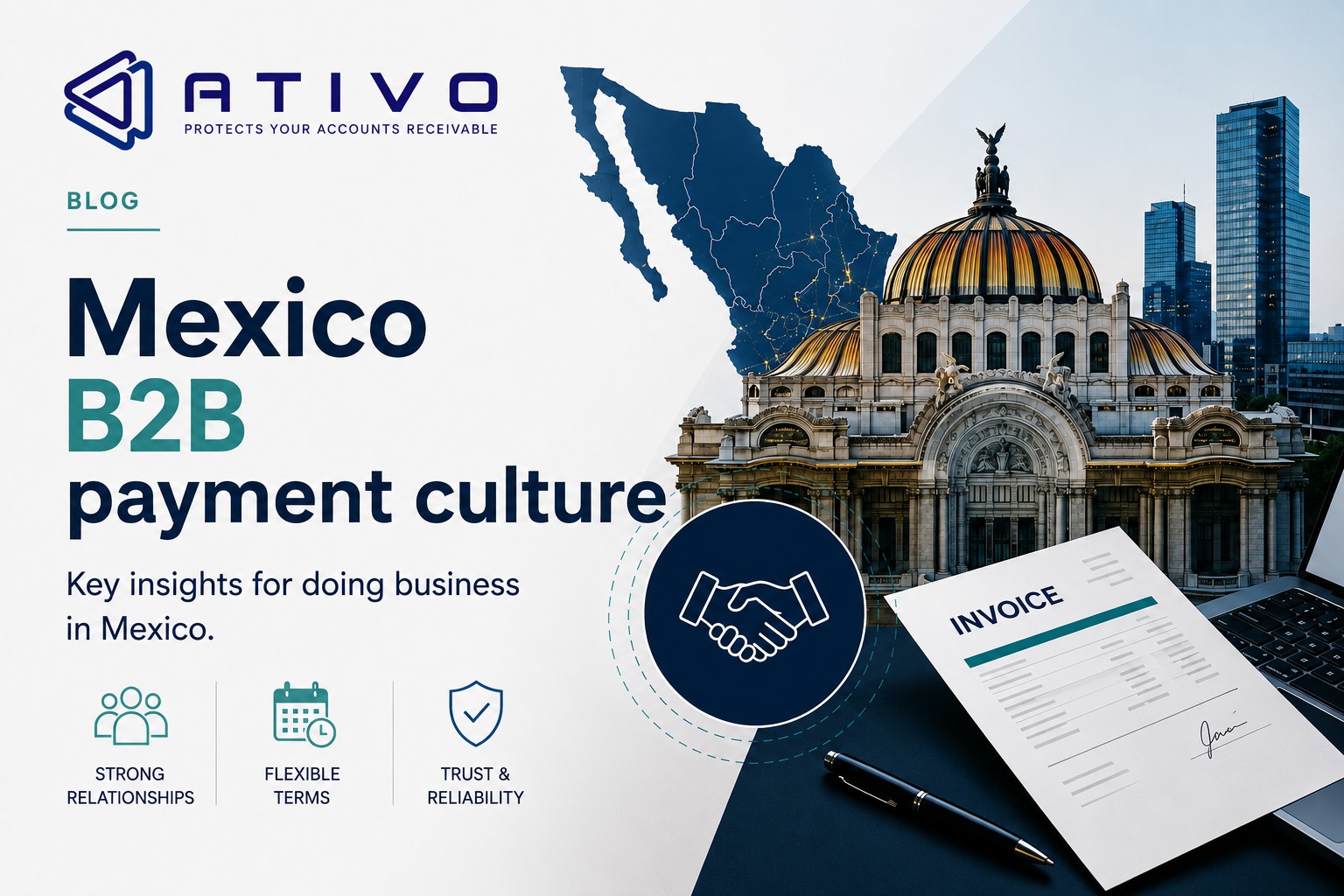

🌎 Debt collection in Mexico operates within a commercial culture that consistently surprises foreign companies — not because Mexican businesses are inherently unreliable, but because the norms governing B2B credit relationships are structurally different from those in the US, Europe, and most Asian markets. Understanding these norms is the prerequisite for protecting your receivables.
Is a Mexican company not paying? Understanding why is the first step — getting expert help is the next.
→ Request a free assessment from ATIVOWhy debt collection in Mexico is different from anywhere else
The structural gap between Mexico's commercial credit culture and international expectations
In markets where B2B credit is heavily formalized, a missed payment deadline signals a clear breach that prompts immediate structured response. In Mexico, B2B payment culture operates on different norms: personal relationships matter more than written contracts, negotiated extensions are expected rather than exceptional, and maintaining the appearance of a good commercial relationship — even when payment is being withheld — is a debtor priority.
The problem for foreign companies is that these norms create systematic disadvantages for creditors who are not physically present in Mexico and do not understand the communication dynamics. Without local presence, cultural fluency, and a clear escalation framework, foreign companies are structurally disadvantaged in collecting invoices Mexico — regardless of the strength of their documentation.
The 5 characteristics of Mexico B2B payment culture that foreign companies misread
Why debt collection in Mexico fails without cultural and legal context
As we analyze in our article on how debts in Mexico grow unnoticed in foreign company portfolios, the most common failure mode is applying the home-market collection playbook to a Mexican buyer:
⚠️ The typical failure pattern for foreign companies collecting invoices Mexico:
- Emails go unanswered because the buyer doesn't feel the same obligation to a remote foreign creditor as to a local supplier
- Legal threats are dismissed as empty because the buyer correctly judges the foreign creditor won't navigate a Mexican judicial process without local support
- Informal extensions accumulate because there is no clear escalation protocol with explicit triggers
- Accounts age past the optimal recovery window — and recovery probability declines with each passing month
The solution is not cultural fluency alone — it is combining cultural understanding with a structured debt collection in Mexico process: formal demand letters in Spanish, personal contact with the debtor's decision-maker, binding written payment agreements, and a credible judicial escalation path when extrajudicial efforts fail.
Adapting your credit operations to Mexico B2B payment culture
As we detail in our guide on 6 tips for B2B credit operations in Mexico that minimize default, the most impactful adaptations to Mexico commercial credit practices are:
A signed invoice is not a pagaré. Requiring a promissory note as a condition of credit approval transforms an informal commercial relationship into an enforceable legal instrument — usable directly in the juicio ejecutivo mercantil without additional documentation.
"Net 30" in an English invoice creates ambiguity. The payment deadline must be stated explicitly in Spanish, confirmed in a signed credit application, and referenced in any extension agreement.
Document in writing: at what number of days overdue you issue a formal demand, and at what point you engage a local collection specialist. Predefined triggers prevent the "one more chance" delay that costs most foreign companies significant recovery probability.
From day 30 of non-payment, collection communication should go through a local specialist — not because your communication is wrong, but because the specialist's cultural and legal context changes the debtor's calculus fundamentally.
Need to adapt your credit operations to Mexico's B2B payment culture?
→ ATIVO designs and manages the process — free initial consultation
How to protect your B2B credit in Mexico before the first invoice
The most cost-effective intervention in debt collection in Mexico is before the credit is extended. As we detail in our guide on KYC Mexico reports for B2B buyer credit risk assessment, a verified KYC report covers RFC and SAT compliance, D&B credit score, national litigation history, payment behavior references from actual credit suppliers, and asset profile. Companies that integrate KYC into their Mexican credit approval process — and require a pagaré for credit above a defined threshold — consistently maintain healthier receivable portfolios than those that rely on the buyer's own representations.
What to do when Mexico B2B payment culture leads to non-payment
As we explain in our step-by-step guide on collecting a debt from a Mexican company, the recovery path depends on debt age and documentation:
How ATIVO helps foreign companies navigate debt collection in Mexico
ATIVO provides debt collection in Mexico services for foreign companies from more than 30 countries — bridging the cultural, linguistic, and legal gap that makes collecting invoices Mexico difficult for international creditors operating remotely.
Frequently asked questions about debt collection in Mexico for foreign companies
Why is debt collection in Mexico different for foreign companies?
Debt collection in Mexico is more challenging for foreign companies because of three structural factors: no local presence to make escalation credible, communication and cultural dynamics that favor local suppliers over remote international creditors, and limited visibility into the debtor's financial and legal situation. Mexican commercial law fully protects foreign creditors' rights — but exercising those rights requires local expertise, bilingual capability, and a credible escalation path.
What is Mexico's B2B payment culture and how does it affect foreign companies?
B2B payment culture Mexico is characterized by extended baseline payment cycles (60–90 days common in many sectors), relationship-based communication where personal trust matters more than contractual formality, and a norm of negotiated payment extensions rather than strict deadline adherence. Foreign companies that apply their home-market credit and collection frameworks without adapting to these norms consistently experience higher default rates and lower recovery rates.
How long does debt collection in Mexico take for a foreign company?
For foreign companies engaging a local B2B specialist, extrajudicial debt collection in Mexico typically resolves in 30 to 90 days when the engagement begins within 60 days of the payment due date. Judicial proceedings (*juicio ejecutivo mercantil*) take 6 to 18 months from filing. Recovery rates at 30–45 days overdue are 2 to 3 times higher than at 90+ days.
Can a foreign company use Mexican courts to collect a B2B debt?
Yes. Foreign companies have the same legal rights as domestic creditors under Mexico's Código de Comercio. The juicio ejecutivo mercantil is available to any creditor — foreign or domestic — with a valid executive title (pagaré, enforceable contract clause, or check). A local specialist manages the proceedings on the foreign creditor's behalf. Preventive asset seizure (embargo preventivo) is available from the first day of proceedings when documentation supports it.
ATIVO: debt collection in Mexico for foreign companies. We bridge the cultural and legal gap — so you get paid.
→ Free assessment — no upfront fees, no obligation