
⚠️ B2B debt collection in Mexico requires local legal expertise — not a global template. When a Mexican client stops paying, the response needs to be fast, legally sound, and culturally informed. A generalist agency without Mexico-specific experience will cost you time, money, and — in the worst case — your right to collect.
Is your Mexican receivables portfolio at risk?
→ Get a free assessment from ATIVO
Why Choosing the Right Debt Collection Agency in Mexico Matters
Mexico operates under a civil law system with commercial disputes governed by the Código de Comercio (Mexican Commercial Code) and the Ley General de Títulos y Operaciones de Crédito (LGTOC). Collection procedures — from extrajudicial negotiation to the juicio ejecutivo mercantil (executive commercial lawsuit) — follow specific legal requirements that differ significantly from U.S., European, or Canadian frameworks.
An agency that doesn't know these rules doesn't just underperform — it can compromise your legal position entirely.
The cost of a wrong choice
Why Local Expertise Matters in B2B Debt Collection in Mexico
Mexico's business environment presents specific challenges for debt recovery that are not visible from abroad: debtors who relocate without notice, complex corporate structures designed to limit liability, and regional variations in court processing times. For international companies, managing debts in Mexico as a strategic priority — not just an operational afterthought — is what separates companies with healthy receivables from those with growing write-off risk.
A local specialist brings:
- Verified knowledge of Mexican commercial law — including the Código de Comercio, LGTOC, and SAT-related constraints on debtor assets
- Established local networks — with notaries, process servers, courts, and law firms across Mexican states
- Cultural fluency — understanding negotiation dynamics that differ significantly from Anglo-Saxon business culture
- Real-time debtor intelligence — RFC verification, SAT status, and corporate structure mapping before the first contact
7 Key Factors to Evaluate a Debt Collection Agency in Mexico
Talk to a B2B debt collection specialist in Mexico — no upfront fees.
→ Submit your case for evaluationExtrajudicial vs. Judicial Collection: Choosing the Right Path
Not every debt requires litigation — and not every agency knows when to draw the line. The most effective B2B debt collection strategies in Mexico use a staged approach: begin extrajudicially to preserve the business relationship and minimize costs, then escalate judicially only when the debtor is unresponsive or when the amount justifies the process.
Corporate out-of-court debt collection in Mexico typically resolves cases in 30 to 90 days at a fraction of the cost of litigation. Judicial collection — through a juicio ejecutivo mercantil — provides enforcement mechanisms including asset seizure (embargo preventivo), but requires 6 to 24 months and upfront legal fees.
| Method | Typical timeline | Cost structure | Best for |
|---|---|---|---|
| Extrajudicial | 30–90 days | Success fee only | Locatable, negotiable debtor |
| Judicial | 6–24 months | Fixed fees + success % | Unresponsive debtor with title |
Due Diligence and Credit Risk: Know Your Mexican Counterpart
The most effective debt collection strategy starts before the debt exists. For international companies extending credit to Mexican businesses, running KYC and credit risk reports on Mexican companies before closing a deal is the most cost-effective form of receivables protection available.
A thorough pre-credit KYC report in Mexico should include: RFC and SAT status verification, corporate structure and legal representative validation, D&B credit score, litigation history across civil and commercial courts, and payment behavior references from other creditors. This information transforms credit decisions from assumptions into evidence-based risk positions.
Proven Track Record: What Results Look Like in Practice
When evaluating an agency's performance, look beyond win rates. Ask: What is the average recovery rate for debts over 90 days? Over 180 days? What percentage of cases are resolved extrajudicially? What is the average time to first payment?
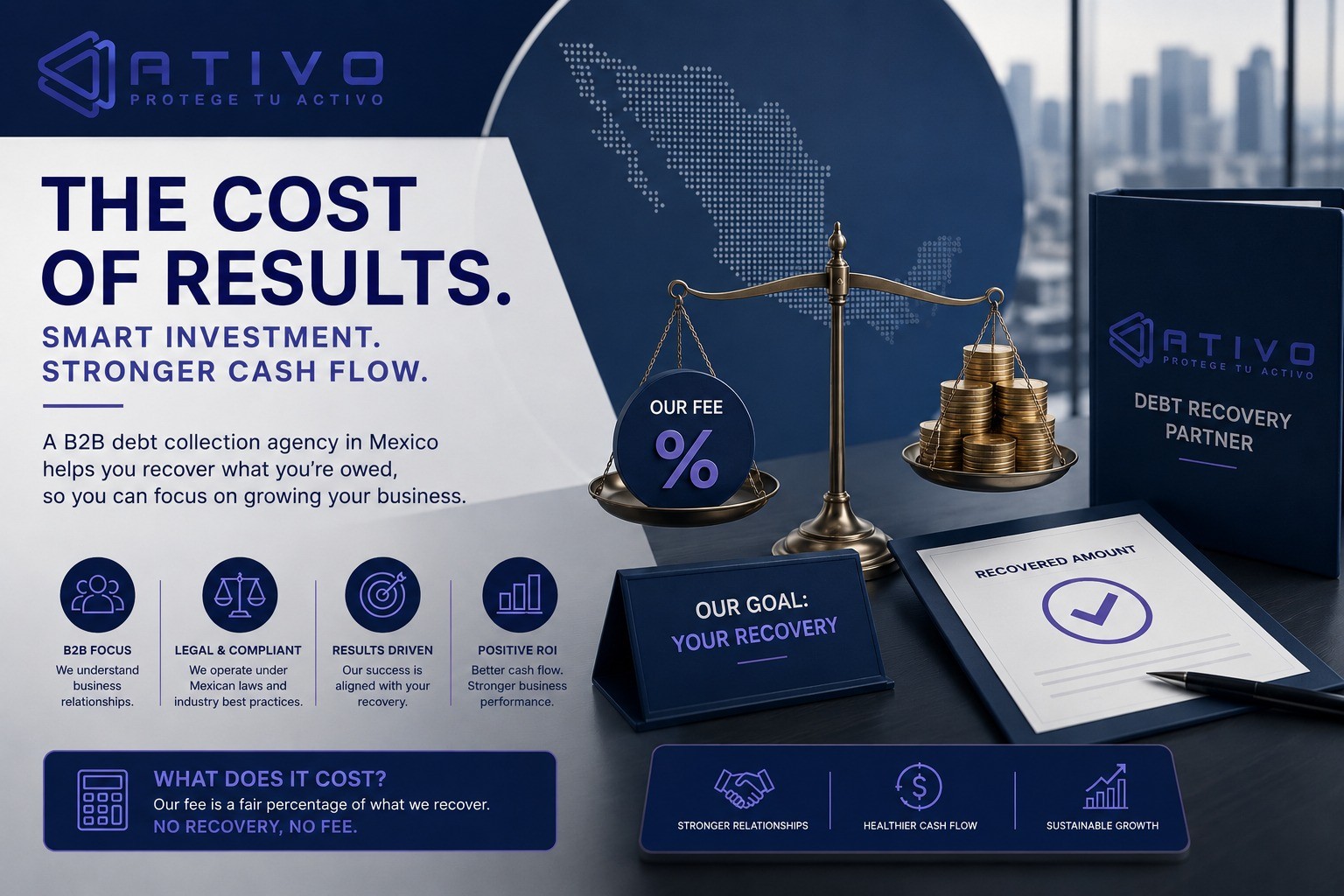
For a concrete benchmark, the receivable management results with Bridgestone Mexico demonstrate what a structured, specialist-led approach delivers: faster recovery, preserved business relationships, and measurable cash flow improvement.
At ATIVO, we work exclusively on B2B cases — no consumer debt, no mass collection. Every case is assigned to a specialist who understands your industry and your debtor's profile.
Frequently Asked Questions — B2B Debt Collection in Mexico
How does B2B debt collection in Mexico work for international companies?
International companies with outstanding receivables from Mexican businesses can initiate collection through a Mexico-based specialist agency. The process begins with extrajudicial negotiation — formal demand letters, phone contact, and payment agreement structuring. If the debtor does not respond, the case escalates to a juicio ejecutivo mercantil, provided a valid title exists (pagaré, contract, or invoice). The agency manages the entire process on a success-fee basis.
What is the difference between extrajudicial and judicial debt collection in Mexico?
Extrajudicial collection is a negotiated process conducted outside the courts — faster, cheaper, and relationship-preserving. Judicial collection involves filing a formal lawsuit in Mexican commercial courts and can result in asset seizure (embargo) and court-ordered payment. Most B2B cases in Mexico are resolved extrajudicially when the debtor is locatable and the debt is documented.
What documents are needed to start a debt collection process in Mexico?
The strongest titles for debt collection in Mexico are: signed promissory notes (pagarés), commercial contracts with default clauses, and acknowledged invoices (facturas). The stronger the documentation, the more collection options are available — including immediate judicial enforcement. Even without a pagaré, a collection process can begin extrajudicially with any documented evidence of the debt.
How long does debt recovery in Mexico typically take?
Extrajudicial collection in Mexico typically takes 30 to 90 days. Judicial collection through the juicio ejecutivo mercantil takes 6 to 24 months depending on court caseload, case complexity, and whether the debtor contests the claim. Acting quickly — before debts age beyond 90 days — significantly improves recovery rates and reduces total collection costs.
Recover what you're owed in Mexico.
→ Contact ATIVO — no upfront fees