
📊 Effective accounts receivable management in Mexico begins before the invoice is overdue — not after. The companies that consistently recover the highest proportion of their B2B credit sales are those that identify payment risk signals early, act on them before the debt ages, and have a structured specialist process in place when internal follow-up is no longer enough. This article details the warning signs that indicate your accounts receivable process needs reinforcement, and what a professional collection response looks like.
Is your accounts receivable portfolio in Mexico showing signs of payment risk?
→ Get a free portfolio assessment from ATIVO — no upfront feesWhy Proactive Accounts Receivable Management in Mexico Is a Strategic Priority
In the Mexican B2B credit market, the gap between a successful sale and collected revenue is wider than most international companies expect. Payment terms of 30, 60, or 90 days are standard — but the discipline with which those terms are enforced varies dramatically by client, industry, and economic cycle. Accounts receivable management in Mexico that relies entirely on the client's goodwill — without a structured monitoring and escalation process — consistently produces higher Days Sales Outstanding (DSO), lower recovery rates, and a portfolio that grows riskier with every new credit sale.
The strategic implication: accounts receivable management is not a back-office function in the Mexican B2B context. It is a direct driver of cash flow, and the companies that treat it that way recover more, write off less, and maintain stronger commercial relationships than those who manage it reactively.
| DSO range | Portfolio health signal | Recommended action |
|---|---|---|
| 0–45 days | Healthy — accounts paying within terms | Maintain monitoring; KYC on new clients |
| 45–90 days | Early warning — some clients stretching terms | Structured follow-up; formal demand letters |
| 90–180 days | High risk — recovery probability declining | Specialist extrajudicial collection |
| 180+ days | Critical — judicial escalation threshold | Evaluate juicio ejecutivo mercantil before prescription expires |
As we explore in our guide on managing debts in Mexico before they silently affect your cash flow, what appears to be a temporary payment delay in the Mexican market frequently becomes a structural problem when no action is taken within the first 60 days.
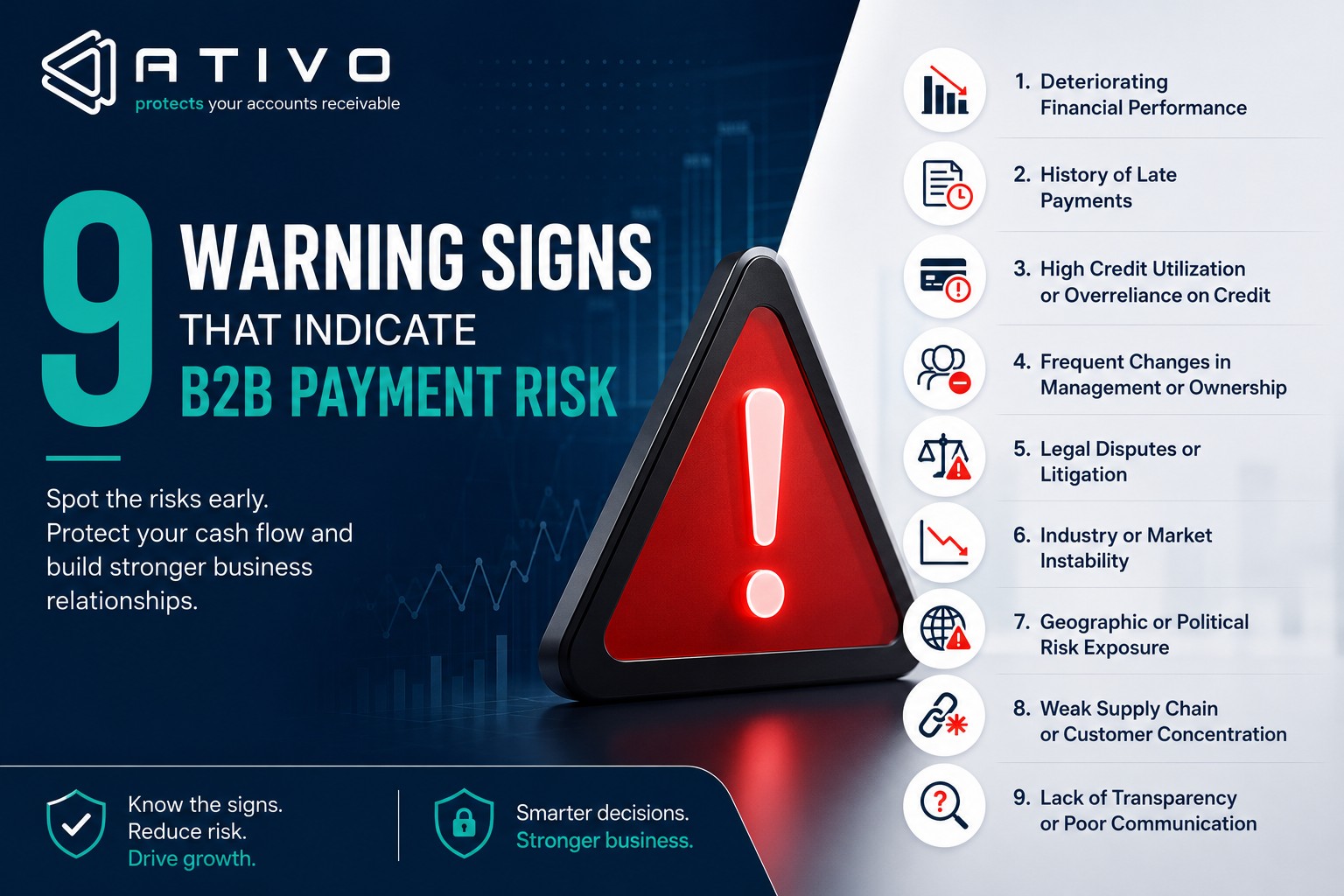
9 Warning Signs That Your Accounts Receivable Management in Mexico Needs Reinforcement
Early identification of payment risk is the highest-value intervention in accounts receivable management in Mexico. These nine signals — any one of which, when present in a client account, should trigger an immediate response — represent the most reliable predictors of deteriorating payment behavior in the Mexican B2B market.

Are any of these warning signs present in your Mexico portfolio right now?
→ Talk to a specialist before the account ages furtherAccounts Receivable Management in Mexico: What to Do When Warning Signs Appear
Identifying a warning sign is the first step — responding to it correctly is where most companies lose ground. The most common failure in accounts receivable management in Mexico is the informal extension: giving the client one more chance, accepting a verbal commitment, and delaying structured action until the account has aged beyond the point where extrajudicial recovery is highly effective.
As we detail in our guide on alternatives for recovering overdue accounts receivable in Mexico, the three recovery paths available — extrajudicial collection, juicio ejecutivo mercantil, and credit guarantee consultancy — serve different risk profiles and debt ages. The right path depends on how early you act.
How ATIVO's Accounts Receivable Management Model in Mexico Works
ATIVO operates exclusively on corporate B2B accounts in Mexico — no consumer debt, no mixed portfolios. Our accounts receivable management in Mexico model is built on three non-negotiable principles that define every engagement:
Frequently Asked Questions — Accounts Receivable Management in Mexico
What are the most important warning signs that accounts receivable management in Mexico is failing?
The nine most reliable warning signs are: disconnected contact information, multiple broken payment promises, post-delivery disputes raised at payment time, bounced checks, repeated references to cash flow difficulties, requests for extensions on already-overdue accounts, non-compliance with agreed payment schedules, last-minute quality disputes, and digital unreachability after a period of normal communication. Any single signal should trigger an immediate transition from informal follow-up to structured professional collection — ideally within 30 to 45 days of the payment due date.
What is the optimal timing for engaging a specialist in accounts receivable management in Mexico?
The optimal window is 30 to 45 days after the invoice due date — when the warning signals are present but the account has not yet aged to the point where recovery probability has materially declined. Accounts receivable management in Mexico specialists consistently achieve better outcomes at this stage than at 90+ days overdue, because the debtor's liquidity, willingness to negotiate, and asset visibility are all higher. Engaging a specialist is not a last resort — it is a timed intervention in a structured recovery process.
Can a company in Mexico manage accounts receivable collections internally?
Internal teams can manage early-stage follow-up effectively — but they face three structural disadvantages when accounts enter the warning-sign phase: they lack the legal expertise to evaluate prescription deadlines and judicial instruments; they are constrained by the commercial relationship in ways that a specialist is not; and they cannot credibly signal judicial escalation as a real consequence rather than an empty threat. For accounts that have exhibited two or more warning signs, a specialist consistently delivers better outcomes than continued internal management.
What happens if the prescription deadline expires on an overdue account in Mexico?
The right to litigate the debt is permanently and irrecoverably lost — regardless of the amount owed, the quality of the documentation, or the debtor's capacity to pay. The creditor's only remaining option is voluntary negotiation, with no judicial leverage. Under the Código de Comercio: promissory note (pagaré) = 3 years from maturity; check = 6 months from issuance; commercial invoice = typically 10 years. Prescription deadline tracking is a non-negotiable component of professional accounts receivable management in Mexico — and missing it is the single most avoidable and most irreversible failure in the collection cycle.
Protect your cash flow in Mexico — detect payment risks early and act before the account ages.
→ Get a free accounts receivable assessment from ATIVO