
💡 Debt collection in Mexico is no longer just an operational task — it is a strategic financial priority. Unpaid invoices don't become a crisis overnight: they build gradually through delayed payments, extended credit terms, and lack of structured follow-up — until they begin to impact your company's financial stability.
Are unpaid invoices from Mexican clients silently affecting your cash flow?
→ Get a free portfolio assessment from ATIVOWhy Debt Collection in Mexico Is a Strategic Priority — Not an Operational Task
For international companies selling to Mexican businesses, revenue is generated when a sale is made — but cash flow is generated only when that sale is collected. When debt collection in Mexico is treated as an afterthought, the result is a portfolio that accumulates risk invisibly. Three factors amplify this risk in the Mexican context:
The Warning Signs Your Debt Collection in Mexico Is Not Working
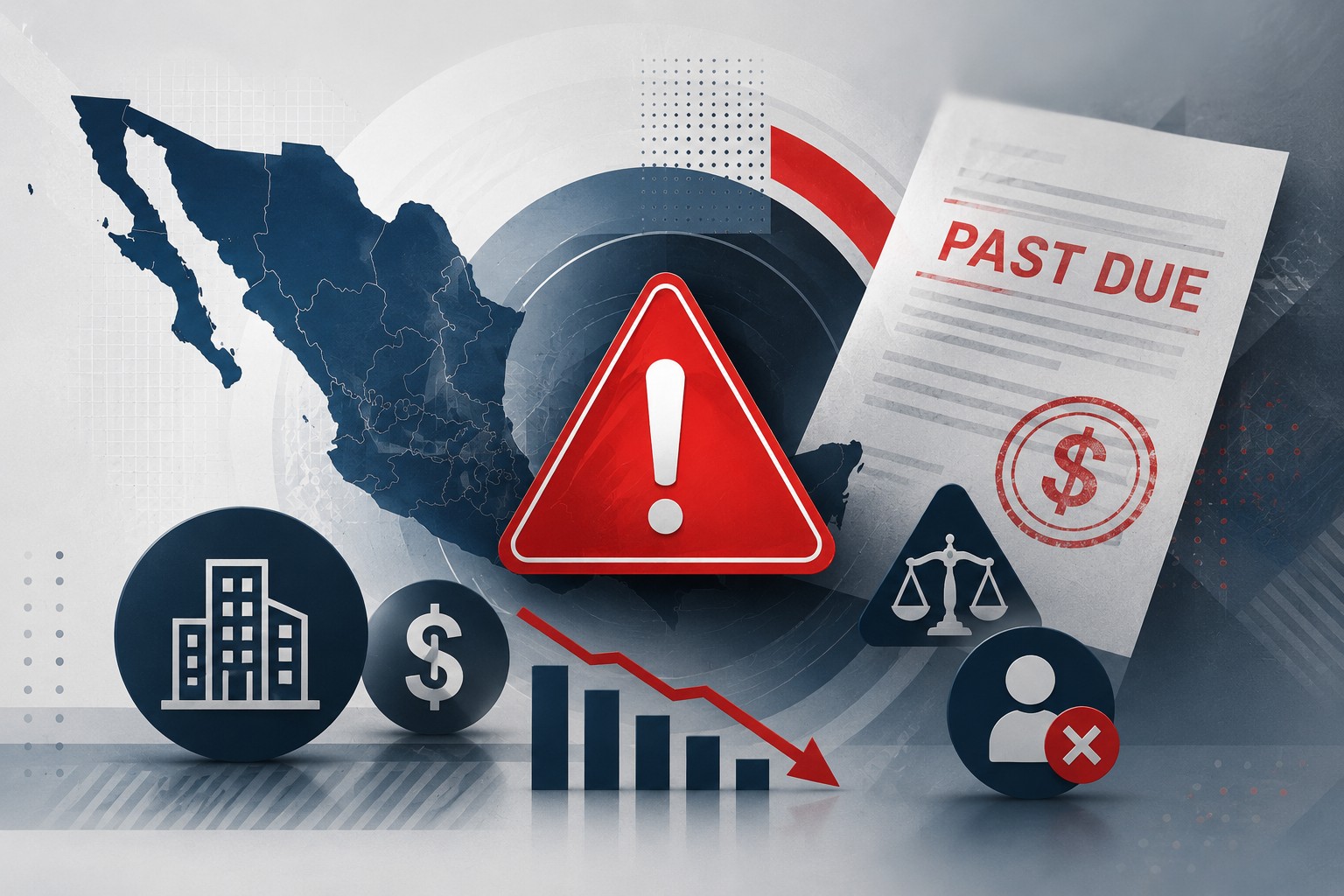
Problems in B2B debt collection Mexico rarely announce themselves. As we explore in our article on proactive accounts receivable management to prevent overdue accounts, the companies that recover more are those that detect these signals early — before accounts become collection problems.
5 indicators that your Mexico portfolio is at risk
Is your debt collection in Mexico reactive rather than strategic?
→ Talk to a B2B specialist — no upfront feesHow to Improve Debt Collection in Mexico: 5 Strategic Actions
As we detail in our guide on choosing the right B2B debt collection service in Mexico, the approach that consistently produces better recovery rates involves five coordinated actions:
Prevention: Credit Risk Before Debt Collection in Mexico Becomes Necessary
The highest-leverage intervention in debt collection in Mexico is the one that prevents bad accounts from entering the portfolio. Running KYC and credit risk reports on Mexican companies before extending credit provides RFC and SAT status verification, corporate structure validation, D&B score, litigation history, and payment behavior references.
Companies that integrate KYC into their credit approval process significantly reduce the volume of accounts that eventually require active B2B debt collection Mexico — and position themselves better for judicial recovery when they do, because the documentation is already in order.
What Effective Debt Collection in Mexico Looks Like in Practice
The receivable management results with Bridgestone Mexico demonstrate what a structured, specialist-led approach delivers: higher recovery rates on overdue accounts, preserved supplier relationships, and a measurably healthier credit portfolio.
The key was not aggressive collection tactics — it was systematic portfolio segmentation, tailored negotiation by debtor profile, and continuous reporting that enabled data-driven decisions at every stage. At ATIVO, we work exclusively on corporate B2B debt collection in Mexico. Every case is assigned to a dedicated specialist with knowledge of your industry, your debtor's profile, and the applicable legal framework — with bilingual real-time visibility through our QUID platform.
Frequently Asked Questions — Debt Collection in Mexico
What are the most common causes of overdue accounts in B2B debt collection Mexico?
The most common causes are: extending credit without risk assessment, insufficient documentation (no pagaré or enforceable contract), lack of structured follow-up protocols, delayed escalation, and absence of portfolio monitoring systems. In the Mexican B2B market, these gaps are amplified by distance (for international companies) and the cultural norm of using supplier credit as primary business financing.
How long does debt collection in Mexico typically take?
Extrajudicial debt collection in Mexico — direct negotiation, demand letters, payment agreements — resolves most B2B cases in 30 to 90 days when activated within the first 60 days of delinquency. Judicial collection through the juicio ejecutivo mercantil takes 6 to 18 months. The right path depends on debt age, documentation quality, debtor profile, and whether the prescription deadline for judicial action is still intact.
What documents are needed to collect a debt in Mexico?
The most effective document is a promissory note (pagaré), which qualifies as an executable title and allows immediate asset seizure in the juicio ejecutivo mercantil. Formal contracts with enforceable default clauses, recognized invoices, and email acknowledgments can also support recovery — extrajudicially and, in some cases, judicially through the juicio ordinario mercantil.
When should an international company hire a debt collection specialist in Mexico?
The optimal moment is 30–45 days after the invoice due date. Recovery rates decline sharply with debt age — receivables under 30 days overdue recover at rates 3–5× higher than those over 180 days. A debt collection in Mexico specialist engaged at 30–45 days produces measurably better outcomes at lower cost than the same case managed internally until 90–120 days.
Recover your B2B debts in Mexico before they become write-offs.
→ Get a free assessment from ATIVO