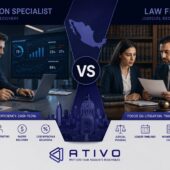

💡 In debt recovery in Mexico, that insight is not philosophical — it is a financial decision with measurable consequences. Companies that manage overdue accounts internally consistently achieve lower recovery rates and higher cost-per-recovered-dollar than those that engage a B2B collection specialist from the right moment.
Are your unpaid invoices in Mexico not responding to internal follow-up?
→ Get a free assessment from ATIVOWhy Debt Recovery in Mexico Requires a Specialist — Not a Generalist
B2B debt recovery in Mexico has specific characteristics that determine which approaches work and which don't. As we explore in our article on managing debts in Mexico before they become a cash flow risk, the gap between what internal teams achieve and what specialists deliver widens significantly as debts age.

5 Tips for Successful Debt Recovery in Mexico
These tips address the most common failure points in debt recovery Mexico. As detailed in our guide on choosing the right B2B debt collection service in Mexico, the difference between providers often comes down to exactly these factors.
Not sure which debt recovery path in Mexico applies to your case?
→ Talk to a specialist — no upfront feesExtrajudicial vs. Judicial: Which Debt Recovery Path in Mexico Applies to Your Case?
As we detail in our article on alternatives for recovering overdue accounts receivable in Mexico, the choice between paths is determined by debt profile, debtor behavior, and documentation:
| Extrajudicial | Judicial (juicio ejecutivo mercantil) | |
|---|---|---|
| Timeline | 30–90 days | 6–18 months |
| Cost | Success fee only | Fixed fees + success % |
| When to use | First step — always | When extrajudicial fails |
| Documentation | Any evidence of debt | Executable title preferred |
| Asset seizure | Not available | From day one of proceedings |
The legal basis for judicial recovery is Article 1391 of the Código de Comercio (Mexican Commercial Code), which establishes which documents have aparejada ejecución (direct enforcement) and allow for immediate asset seizure.
What Expert Debt Recovery in Mexico Looks Like in Practice
The receivable management results with Bridgestone Mexico illustrate what structured, specialist-led debt recovery in Mexico delivers: higher recovery rates on overdue accounts, preserved supplier relationships, and a measurable improvement in portfolio health — with full visibility at every stage.
The key was systematic debtor segmentation, tailored negotiation strategy, and real-time reporting that allowed Bridgestone's credit team to make informed decisions continuously. That is what a professional collection specialist Mexico delivers that no internal team — regardless of effort — can replicate without the same infrastructure.
How ATIVO Approaches B2B Debt Recovery in Mexico
Segmentation by debt age, amount, debtor profile, and documentation quality before the first contact — ensuring the right strategy is applied to each case from day one.
Professional negotiation, formal demand letters, and binding payment agreements — structured to formalize commitments and preserve the escalation path.
In-house legal capability for juicio ejecutivo mercantil proceedings when extrajudicial efforts reach their limit — no change of provider, no loss of context.
Full case tracking through our QUID platform, in English, for international clients — every contact, every agreement, every milestone, in real time.
For companies that want to prevent future overdue accounts, we also offer KYC and credit risk reports on Mexican companies before credit is extended.
Frequently Asked Questions — Debt Recovery in Mexico
What is the most effective approach to debt recovery in Mexico?
The most effective approach combines early specialist engagement — ideally within 30–45 days of the due date — with a structured extrajudicial process that includes formal demand letters, documented negotiation, and binding payment agreements. For resistant debtors, escalation to the juicio ejecutivo mercantil provides legal enforcement including asset seizure. A collection specialist Mexico who manages both paths without changing providers achieves the best outcomes.
How long does debt recovery in Mexico take?
The extrajudicial path for B2B debt recovery Mexico typically resolves in 30 to 90 days when the debtor is locatable and responsive. The judicial path takes 6 to 18 months from filing to judgment, with additional time if enforcement requires asset seizure. Early engagement significantly improves outcomes — debts recovered under 60 days overdue require significantly less effort and cost than those over 180 days.
Do I need to go to court to recover unpaid invoices in Mexico?
No — and for most B2B cases, the extrajudicial route resolves the account without litigation. A professional collection specialist Mexico resolves between 70% and 80% of corporate cases through direct negotiation and payment agreements, without filing a lawsuit. Court proceedings are reserved for debtors who are unresponsive, who default on signed payment agreements, or where the debt amount makes litigation the most rational economic decision.
What happens if my right to litigate a debt in Mexico expires?
Under the Mexican Commercial Code, the right to litigate a debt has a prescription deadline: 3 years for a promissory note (pagaré), 6 months for a check. Once this deadline passes, the judicial option is permanently lost — regardless of the amount owed or the debtor's capacity to pay. This makes proactive prescription deadline management a non-negotiable component of any debt recovery Mexico strategy.
Recover what you're owed in Mexico — with a specialist that has done it before.
→ Get a free case assessment from ATIVO