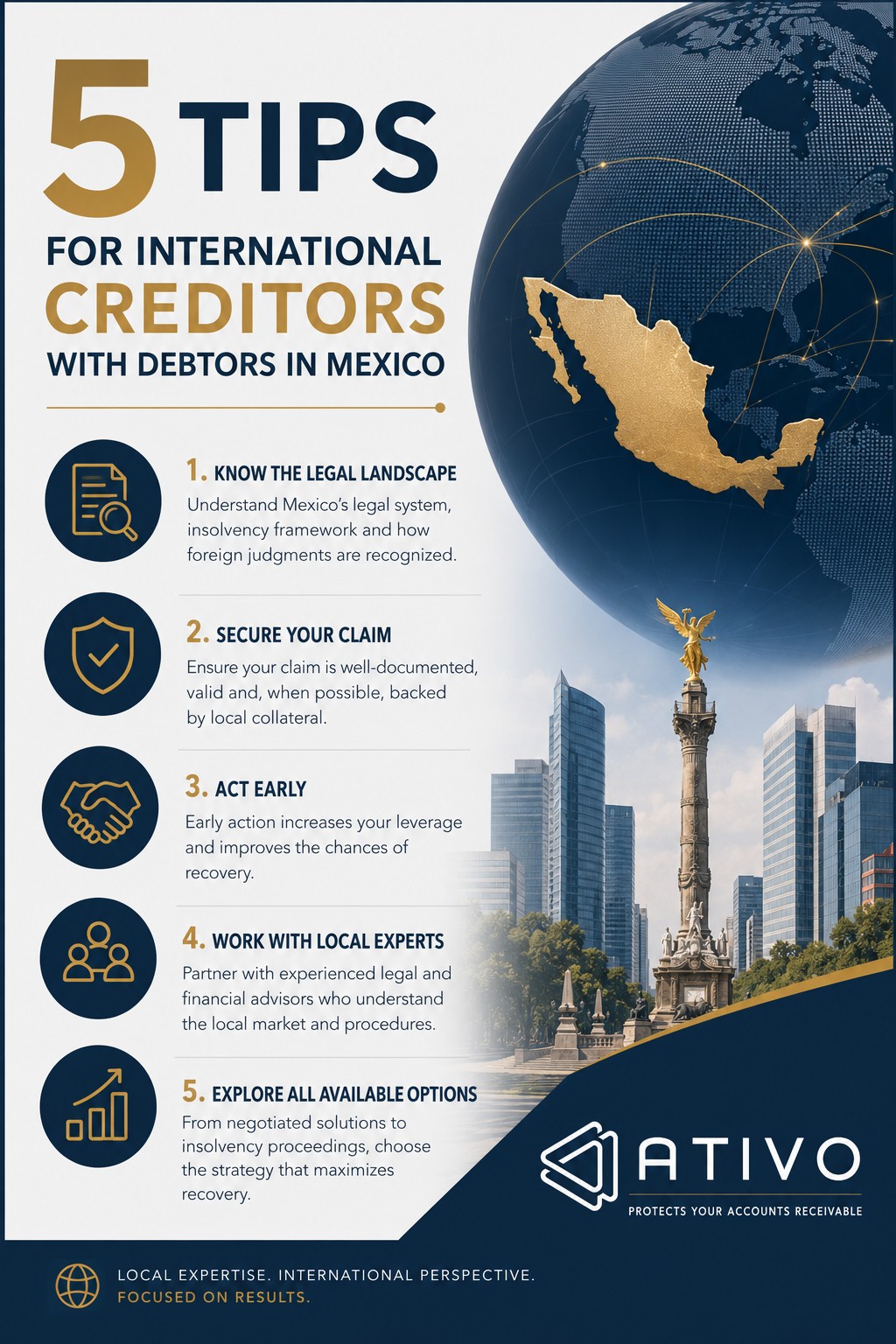

💡 Debt collection Mexico is a distinct challenge for international companies. The legal framework, negotiation dynamics, and consequences of a misstep — a missed prescription deadline, an informal agreement that doesn't hold, a debtor who becomes inubicable — are costly in ways that internal teams rarely anticipate. These five tips address the failure points that cost international companies the most.
Is your company struggling with unpaid invoices from Mexican clients?
→ Get a free debt collection assessment from ATIVOWhy Debt Collection Mexico Is Different for International Companies
As we explore in our article on managing debts in Mexico before they affect your cash flow, international companies often underestimate the structural differences until a case fails. The key factors:
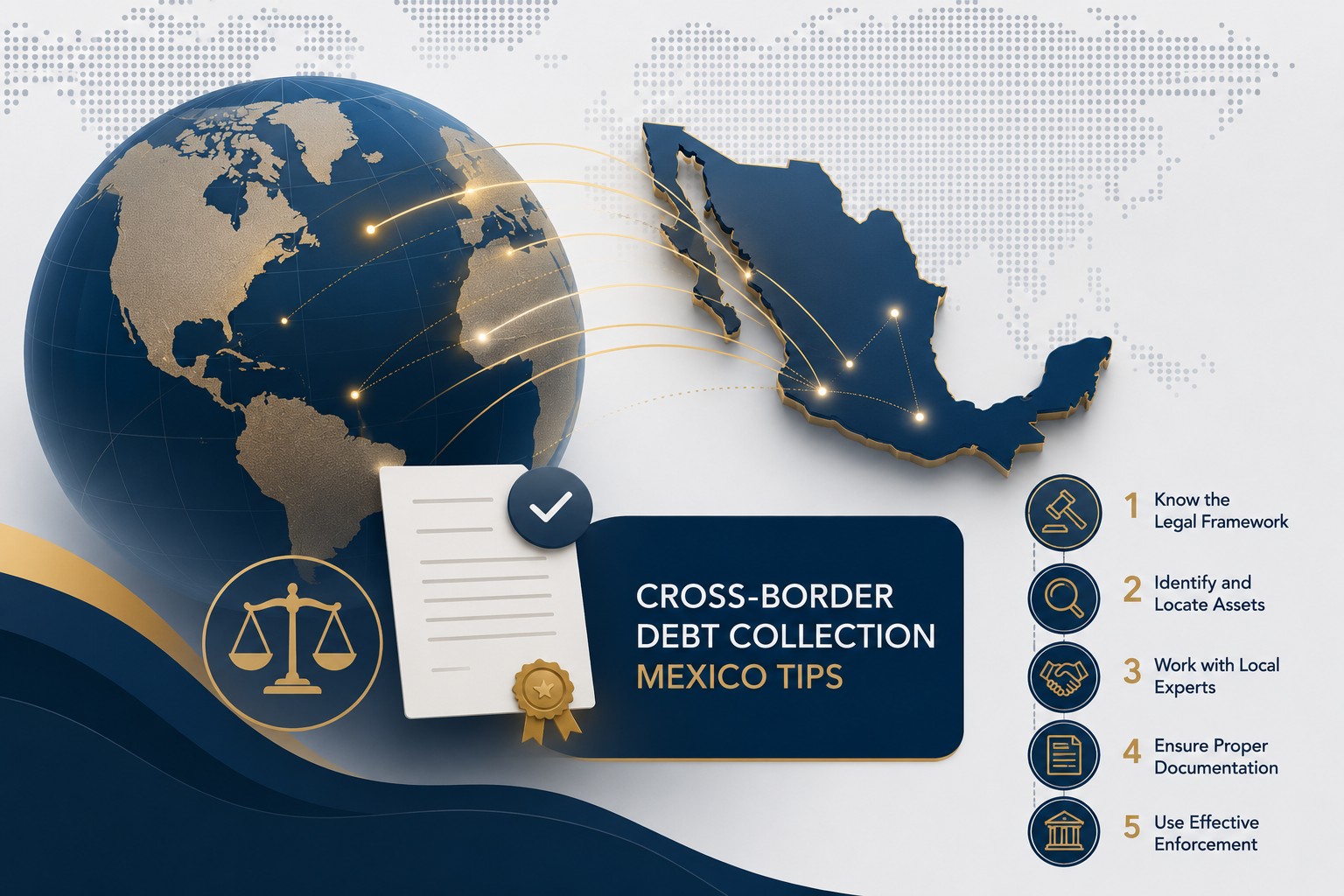
Tip 1: Conduct Annual Collection Audits — and Act on What You Find
A collection audit is a systematic review of your entire accounts receivable recovery Mexico portfolio — not just accounts currently in collections. The audit should answer:
- What is the average age of outstanding receivables by client?
- Which accounts have missed payment terms more than once in the past 12 months?
- What percentage of your Mexico receivables are past 30 / 60 / 90 days?
- What documentation do you hold — and does it qualify as an executable title?
- What prescription deadlines are approaching in the next 90 days?
The value is not the data — it is the action it triggers. Build the response protocol into the audit: for each risk category identified, a specific escalation is triggered automatically.
Tip 2: Analyze Each Debtor Account Before Making Contact
Effective debt collection Mexico requires a different conversation for each debtor, built on understanding their specific situation. Before making the first formal contact, gather:
- Payment history: Is this a one-time delay or a pattern?
- Financial indicators: SAT disputes, RFC status changes, litigation, news of restructuring
- Account context: Does this client represent significant future revenue? Is the relationship already deteriorating?
- Documentation quality: What do you hold — invoices, contracts, pagarés, email acknowledgments? Which qualify as executable titles?
This analysis determines the communication style, escalation threshold, and settlement parameters. A repeat late payer who has stopped returning calls deserves a different approach than a client with a 3-year clean history who is 15 days late.
Tip 3: Build a Tailored Action Plan for Each Account
Once the debtor profile is understood, build a written action plan with five defined elements:
Ready to put these debt collection Mexico tips into practice?
→ Talk to a B2B specialist — no upfront feesTip 4: Partner with a Local Debt Collection Mexico Specialist
For cross-border debt collection Mexico, the moment to engage a local specialist is earlier than most companies think — ideally at 30 to 45 days overdue, not 90 to 120. Recovery rates decline sharply with debt age, and a local specialist engages with knowledge of the debtor's market, communication norms, and legal options that internal teams in the US or Canada simply don't have access to.
As we detail in our guide on choosing the right debt collection service in Mexico, the essential criteria are: verified local legal expertise, bilingual reporting, a success-fee model with no upfront costs, and the ability to escalate from extrajudicial to judicial proceedings without changing providers.
Tip 5: Know Your Legal Options Before You Need Them
Recover unpaid invoices Mexico effectively means knowing which legal instruments are available before a case requires them. As we detail in our article on legal alternatives for recovering overdue accounts receivable in Mexico, the three primary paths are:
The prescription deadline for each option makes knowing these paths in advance non-negotiable. A pagaré prescribes in 3 years under the Código de Comercio. If that deadline is approaching, the action plan must include judicial filing before the window closes — or the option is permanently lost.
What Structured Debt Collection Mexico Looks Like in Practice
The receivable management results with Bridgestone Mexico demonstrate what these five tips produce when executed with specialist support: higher recovery rates on overdue accounts, preserved supplier relationships, and a portfolio that performs better over time.
At ATIVO, we specialize exclusively in corporate B2B debt collection Mexico — bilingual case management, real-time visibility through our QUID platform, and in-house legal capability for judicial escalation. For companies that want to prevent future overdue accounts, we also offer KYC and credit risk reports on Mexican companies before credit is extended.
Frequently Asked Questions — Debt Collection Mexico
How is debt collection Mexico different for international companies?
For international companies, debt collection Mexico presents additional complexity: cross-border language barriers, distance from the debtor, unfamiliarity with Mexican commercial law and judicial instruments, and limited ability to conduct in-person verification. These factors make local specialist engagement more important — and earlier — than for domestic creditors.
What is the most effective approach for a US company to collect overdue invoices from a Mexican client?
Extrajudicial collection activated at 30–45 days overdue through a local B2B specialist — managing the case bilingually with real-time reporting for the US-based credit team. If extrajudicial fails after 60–90 days, escalate to the juicio ejecutivo mercantil if an executable title (pagaré, recognized contract) is available. Act before prescription deadlines eliminate the judicial option permanently.
Do I need a Mexican lawyer for debt collection Mexico?
Not for extrajudicial collection — a specialized B2B collection agency can manage negotiation, demand letters, and payment agreements without legal proceedings. However, if the case requires the juicio ejecutivo mercantil, legal representation before a Mexican commercial court is required. The best agencies have in-house legal counsel that manages this transition without the creditor changing providers.
How long does cross-border debt collection Mexico take?
Extrajudicial cross-border debt collection Mexico resolves in 30 to 90 days in most cases when activated within the first 60 days of delinquency. Judicial proceedings take 6 to 18 months. Acting early — before 60 days overdue — consistently produces better outcomes at lower cost than later intervention.
Recover your Mexican receivables faster — with a specialist that knows the market.
→ Get a free assessment from ATIVO