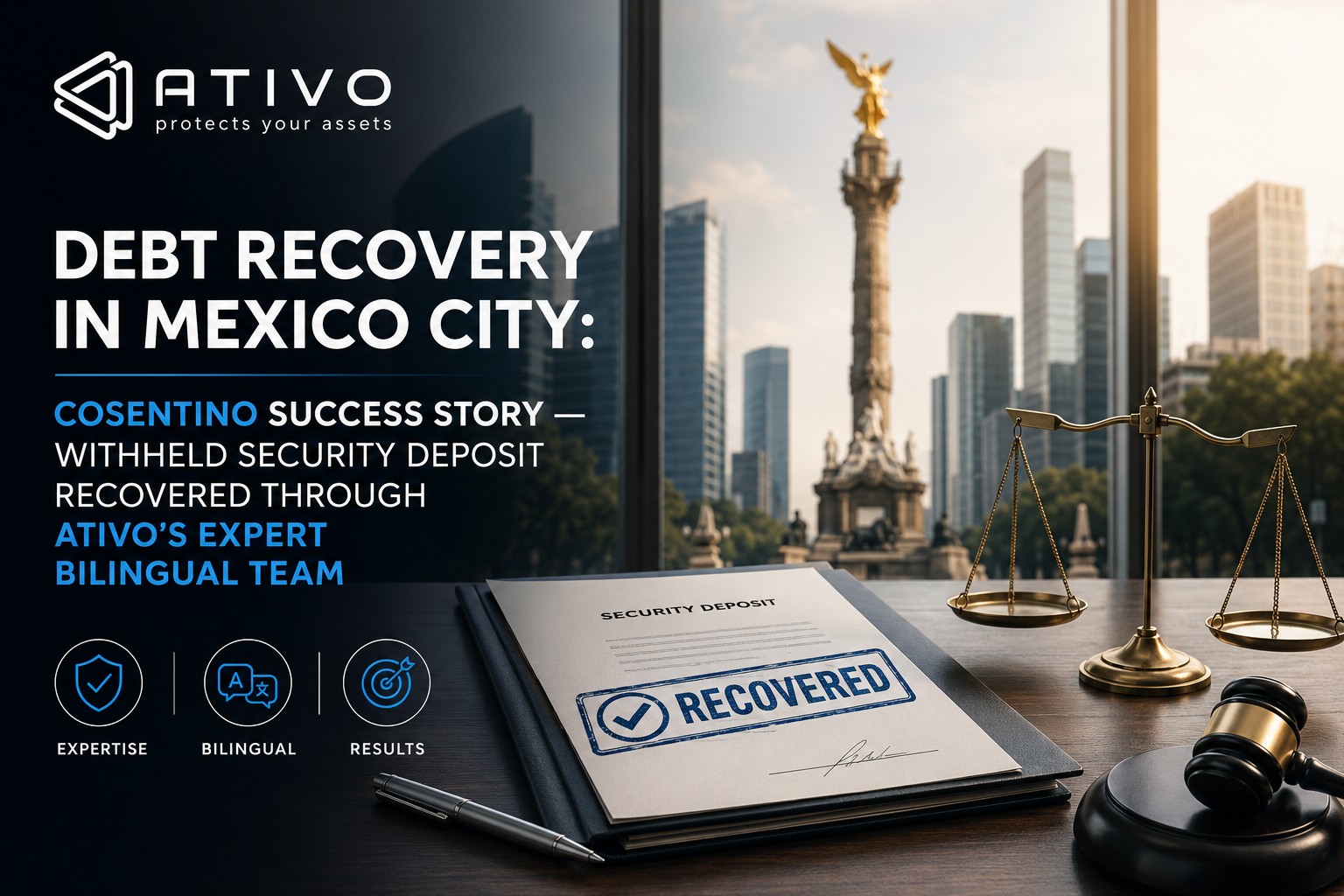
🏢 When COSENTINO — a global leader in architectural surfaces — relocated its Mexico City distribution center, their landlord withheld the security deposit. For a multinational with corporate operations in the U.S., recovering that deposit from a Mexican landlord required more than a demand letter: it required expertise in Mexico City's leasing legal framework, a structured debt recovery in Mexico City strategy, and a provider capable of navigating a cross-border commercial dispute with the professionalism that COSENTINO's scale demanded.
Does your company have an overdue or withheld commercial claim in Mexico City?
The Challenge: Security Deposit Withheld — Debt Recovery in Mexico City for a Multinational
COSENTINO had been leasing office space in Mexico City for several years. When their Mexican operations expanded and they relocated their distribution center to a new facility near Mexico City, they vacated the original premises — and their landlord withheld the security deposit rather than returning it upon departure. For COSENTINO's U.S. corporate office, which viewed the security deposit as a recoverable asset on the company's balance sheet, this was not simply a Mexico City landlord dispute. It was a cross-border commercial claim involving Mexican leasing law, local enforcement mechanisms, and a debtor — the landlord — who had no financial incentive to return the funds voluntarily.
The complexity of this type of case in debt recovery in Mexico City is frequently underestimated by international companies. A withheld security deposit is a legitimate commercial debt — but recovering it requires understanding Mexico City's specific leasing regulatory framework, the distinction between extrajudicial negotiation and judicial enforcement available under Mexican civil and commercial law, and the communication dynamics that produce results from Mexican landlords who have decided to retain funds they are not entitled to keep.
⚠️ The international creditor challenge in Mexico City: For multinational companies managing lease portfolios across Latin America, withheld security deposits in Mexico City represent a specific category of commercial debt recovery Mexico that requires local expertise. The legal framework governing lease deposits in Mexico City is distinct from U.S. and European frameworks — and standard international collection approaches do not translate directly to the Mexican context.
As we explore in our guide on key strategies for bad debt recovery in Mexico, the most effective intervention in any commercial debt situation is the one that combines legal knowledge of the applicable framework with a recovery strategy precisely calibrated to the debtor's actual position and leverage.
How ATIVO's Debt Recovery in Mexico City Resolved the COSENTINO Case
1
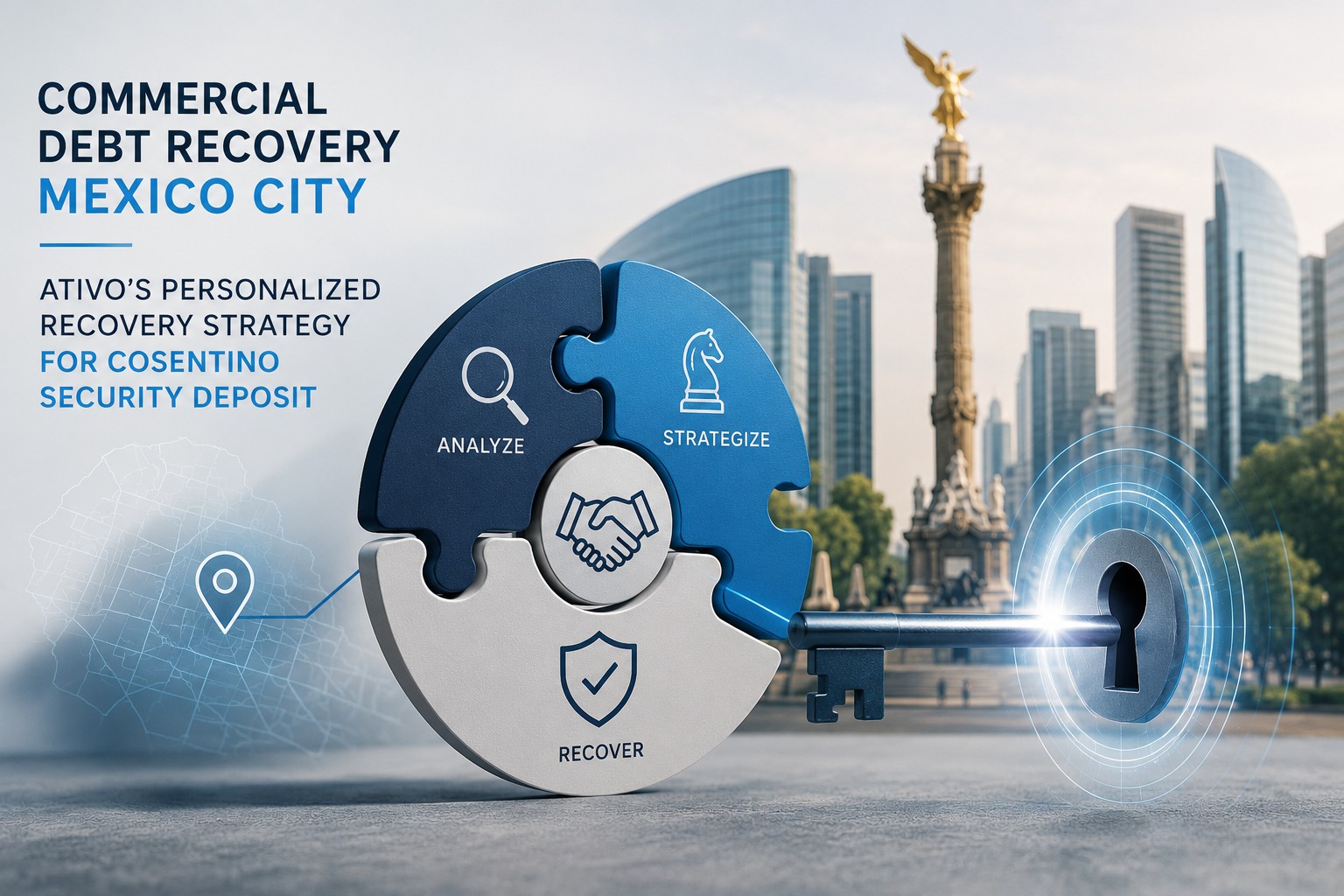
Comprehensive legal context analysis — Mexico City leasing frameworkATIVO's first step was providing COSENTINO with a comprehensive understanding of the legal context surrounding the withheld security deposit. Mexico City's leasing regulations, the rights of commercial tenants upon departure, the landlord's legal obligations regarding deposit return, and the available enforcement mechanisms under Mexican commercial and civil law — this knowledge transformed COSENTINO's position from a company reacting to a landlord's decision into one making informed, legally grounded decisions about how to pursue recovery. For an international company navigating debt recovery in Mexico City from a U.S. corporate office, this contextual expertise was the foundation of everything that followed.
2
Personalized recovery strategy precisely calibrated to the caseATIVO implemented a debt recovery strategy designed specifically for the COSENTINO case — not a standard collection process applied generically. The landlord's position, their legal vulnerabilities regarding the deposit retention, the commercial leverage available to COSENTINO as a departing tenant who had fulfilled their obligations, and the enforcement options under Mexico City's legal framework were all incorporated into a structured negotiation strategy that combined professional pressure with credible judicial escalation signaling. The approach was designed to produce a negotiated resolution — faster, cheaper, and with less disruption than litigation — while maintaining full readiness to escalate judicially if the landlord remained unresponsive.
3
Cross-border coordination — aligning Mexico City operations with U.S. corporate reportingOne of the specific challenges in this case was the coordination between ATIVO's Mexico City operations and COSENTINO's U.S. corporate office, which had accounting, legal, and shareholder reporting implications for the security deposit recovery. ATIVO's bilingual management and English-language reporting ensured that COSENTINO's corporate team had full visibility into the recovery process, received documentation in the format required for their internal reporting, and could make informed decisions about strategy at each stage without language barriers or translation delays. This coordination capability is what distinguishes professional debt recovery in Mexico City for international companies from generic local collection services.
4
Management empowerment for future lease decisions in MexicoBeyond the immediate recovery, ATIVO's engagement equipped COSENTINO's Mexico management team with actionable knowledge about handling future lease decisions in Mexico: what documentation to require at lease inception to protect the security deposit, how to structure departure processes to minimize landlord retention risk, and what recovery mechanisms are available if a future landlord withholds a deposit. This forward-looking dimension of the engagement transformed a recovery service into a strategic asset for COSENTINO's ongoing Mexico operations — enhancing the management team's capacity to protect the company's financial interests in future lease transactions.
Results: What Debt Recovery in Mexico City Delivered for COSENTINO
💰
Full security deposit recovered
Complete recovery of the withheld deposit — a crucial asset for COSENTINO's U.S. corporate office, restored to the balance sheet through structured extrajudicial recovery.
📊
Financial stability reinforced
Recovery of the security deposit reinforced COSENTINO's financial stability and shareholder confidence — with the asset properly reflected in corporate reporting.
🧠
Management empowerment
COSENTINO's Mexico management team gained practical knowledge of Mexico's leasing framework — directly applicable to future lease decisions and deposit protection strategies.
🌐
Strengthened confidence in Mexico operations
As Luis Navarro stated: ATIVO's intervention reinforced trust in doing business in Mexico — converting a challenging dispute into evidence that commercial rights can be enforced effectively in the Mexican market.
The expertise and dedication of ATIVO's team in Mexico City were instrumental in recovering our security deposit. Their strategic approach not only secured our funds but also reinforced our trust in doing business in Mexico.
Luis Navarro, CEO — COSENTINO Mexico
Debt Recovery in Mexico City for International Companies: Key Considerations
The COSENTINO case illustrates challenges that are structurally common for multinational companies managing commercial operations in Mexico City. Four considerations define the commercial debt recovery Mexico landscape for international creditors:
⚖️ Local legal framework expertise
Mexico City's leasing, civil, and commercial legal frameworks are distinct from U.S. and European contexts. Recovery strategies that work in other markets do not translate directly — local expertise is non-negotiable.
🌐 Bilingual cross-border coordination
International companies need English-language reporting, documentation, and case updates that meet corporate reporting standards — without translation delays that slow decision-making at critical moments.
📋 Documentation for corporate reporting
Security deposits, commercial claims, and B2B debts in Mexico have corporate accounting and shareholder reporting implications that require recovery documentation meeting international standards.
🏙️ Mexico City-specific enforcement
Commercial debt enforcement in Mexico City involves specific courts, procedures, and professional networks that differ from other Mexican jurisdictions — local operational presence matters.
As we detail in our article on alternatives for recovering overdue accounts receivable in Mexico, the range of recovery instruments available depends on the documentation, the legal framework governing the obligation, and the debtor's position. For lease security deposits specifically, the legal entitlements are clear — but enforcing them requires local expertise and professional persistence.
1
Engage local expertise immediately when a Mexican landlord or commercial debtor retains funds without legal basis. The longer the delay before professional intervention, the more established the debtor's retention position becomes.
2
Understand the legal framework before making contact. The legal basis for your claim, the enforcement options available, and the debtor's legal vulnerabilities must be understood before the first contact — not discovered reactively.
3
Document the departure process at the moment of occurrence. Future lease disputes in Mexico are won or lost on the documentation produced when the premises are vacated — condition reports, signed inventories, formal notification of departure, and written demand for deposit return.
4
Run KYC on landlords before signing leases. As we explore in our guide on KYC reports for B2B decisions in Mexico, pre-transaction intelligence on the counterparty's legal and financial standing applies to landlords as much as to commercial buyers — and it informs which lease terms to negotiate for deposit protection.
Does your company have a withheld deposit or overdue commercial claim in Mexico City?
Frequently Asked Questions — Debt Recovery in Mexico City
What types of commercial debts can ATIVO recover in Mexico City?
ATIVO's debt recovery in Mexico City covers B2B commercial obligations across all sectors: overdue invoices, withheld security deposits (as in the COSENTINO case), contract payment disputes, promissory note (pagaré) enforcement, and judicial collection through juicio ejecutivo mercantil when extrajudicial recovery is exhausted. For international companies, ATIVO provides bilingual management, English-language reporting, and cross-border coordination that meets corporate documentation standards — making professional debt recovery in Mexico City accessible without requiring the creditor's team to manage local legal complexity directly.
Can a multinational company recover a withheld security deposit in Mexico City?
Yes — as the COSENTINO case demonstrates. A withheld security deposit is a commercial debt recoverable under Mexican civil and commercial law, with specific legal entitlements for commercial tenants who have fulfilled their lease obligations. Effective debt recovery in Mexico City for this type of claim requires: understanding the specific legal framework governing commercial lease deposits in Mexico; structuring a professional recovery approach that combines legal pressure with credible escalation signaling; and cross-border coordination that allows the international company's corporate team to make informed decisions without navigating Mexican legal terminology directly.
How does ATIVO's debt recovery in Mexico City work for international companies?
ATIVO's process for international clients in Mexico City begins with a comprehensive analysis of the legal context governing the specific debt — understanding what rights the creditor has, what obligations the debtor has failed to fulfill, and what recovery instruments are available under applicable Mexican law. This analysis informs a personalized recovery strategy, communicated in English throughout the process. Case updates, legal documentation, negotiation status, and recovery outcomes are all provided in English-language formats compatible with corporate reporting requirements. The engagement model is success-fee based: ATIVO charges a percentage of what is recovered, with no upfront retainer and no cost for cases where recovery does not occur.
How long does debt recovery in Mexico City typically take for commercial claims?
Resolution timeline depends on the specific claim type, the debtor's position, and whether extrajudicial negotiation produces a voluntary resolution. For commercial claims similar to the COSENTINO case — where the legal basis is clear and the debtor has made a retention decision that is legally indefensible — professional extrajudicial recovery typically produces resolution in 30 to 90 days. When judicial escalation is required — through civil or commercial court proceedings in Mexico City — timelines extend to 6 to 18 months. ATIVO's integrated approach manages both phases under one provider: extrajudicial recovery first, judicial escalation activated without provider change if needed.
Does your company have an overdue commercial claim or withheld deposit in Mexico City?